

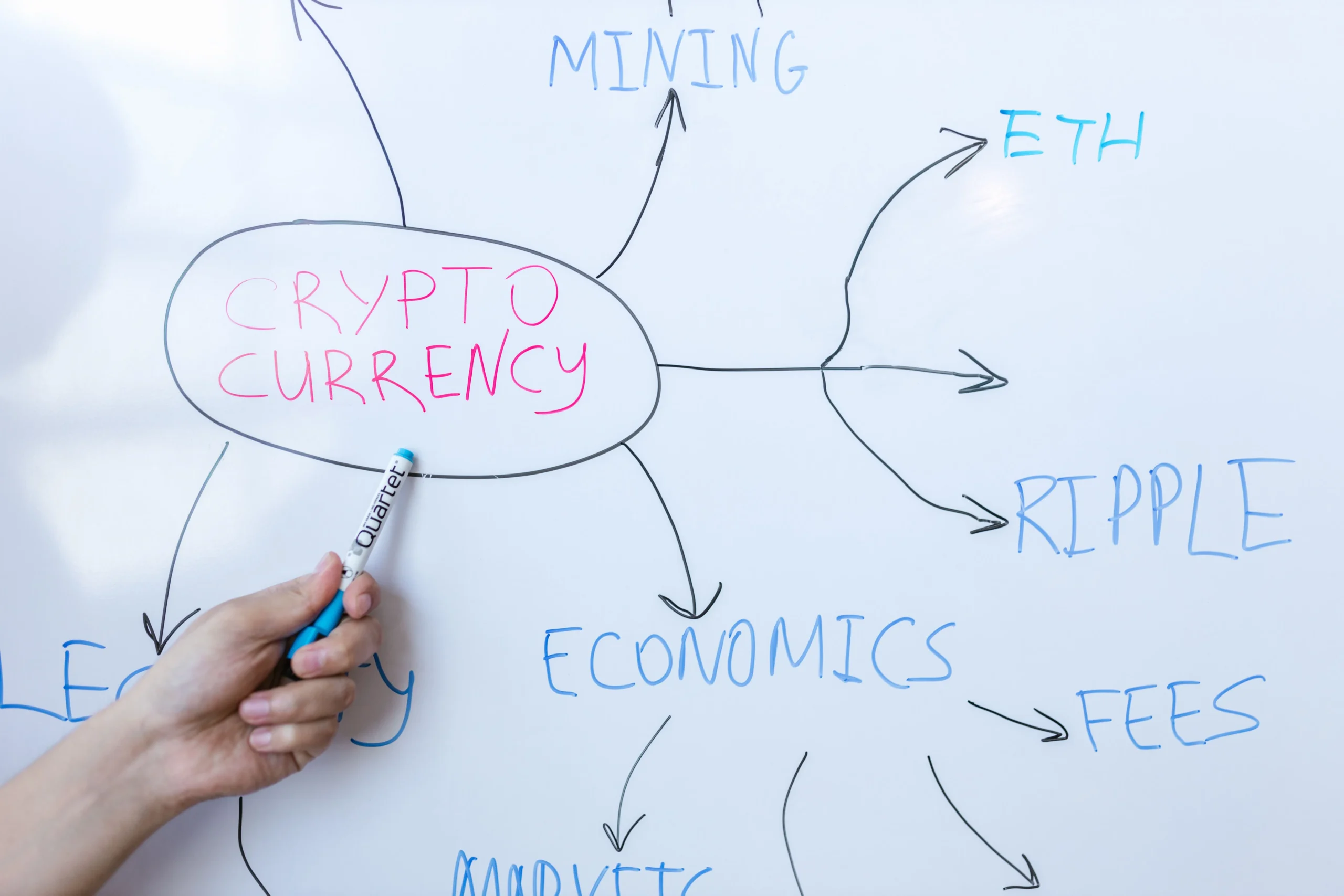
Blockchain trade finance uses shared digital ledgers and, increasingly, stablecoins to finance and track the flow of money moving goods between countries. The idea is simple: an exporter who waits months to get paid receives cash now, from lenders who may be on another continent. Our trade finance guide explains the basics.
The real test lies not in the technology itself, but in whether exporters rejected by banks can secure financing and whether lenders can recover their loans. Africa is where both questions are sharpest.
Key takeaways
- Blockchain trade finance primarily speeds up funding, not credit decisions: someone still has to judge the exporter and the buyer outside of the blockchain.
- The gap is large: the global trade finance shortfall was approximately $2.5 trillion in 2025, up from $1.5 trillion in 2015; Africa’s share is approximately $100 billion a year.
- A real case: In March 2023, a Nigerian export finance platform opened a stablecoin-funded revolving credit line and drew its first $71,000 within days.
- What didn’t change: currency risk, legal enforcement in the exporting country, and dependence on a single borrower remained unchanged.
- The real obstacle for exporters is the bank: Nigerian exporters describe three-month loan decisions and $27,000 of demurrage caused by late bank documents.
How blockchain trade finance works
Trade finance encompasses the money and documentation exchanged between the exporter who ships the goods and the importer who pays for them. Classic tools include letters of credit, invoice financing, and pre-shipment loans. These exist because exporters need liquidity before the buyer pays, and buyers are reluctant to pay before receiving the goods.
Blockchain intervenes at two points:
- Documents: Bills of lading, invoices, and certificates are recorded digitally, so all parties see the same version and it is more difficult to commit fraud by duplicating documents.
- Funding: lenders supply stablecoins to a pool or credit line, the platform grants loans to exporters, and repayments are recorded on the blockchain, making them visible to all lenders.
The first use, digital documents, depends on legislation. The UK’s Electronic Trade Documents Act came into force in September 2023 and gives electronic bills of lading the same legal validity as paper documents; other countries are adopting similar regulations. The second use, funding, is where most blockchain-based projects in emerging markets are located.
(obrázok: flow of an export deal – lenders supply stablecoins to a credit line, the platform pre-finances the exporter, goods ship, the buyer pays, repayment returns to lenders | alt: blockchain trade finance – how a stablecoin credit line funds an export)
The trade finance gap in Africa
Banks reject many trade finance applications from small and medium-sized enterprises, especially in developing countries. They cite cost, compliance checks, and the difficulty of assessing small exporters.
Key figures
- $2.5 trillion – global trade finance gap in 2025, unchanged from 2023 and up from $1.5 trillion in 2015
- Approximately $100 billion per year – Estimated trade finance gap in Africa, 2025
- 18% – percentage of African banks’ trade finance portfolios that support intra-African trade.
Estimates of the gap in Africa vary depending on the definition: some place it much higher when the unmet demand of informal traders is included. All estimates agree on the direction: small exporters are the ones who are excluded.
What exporters say about bank trade finance
The gap figures become concrete in the accounts of the exporters themselves in Nigerian business forums.
- Months of waiting. A commodity exporter describes a bank that is still processing a loan of approximately 8 million naira after three months, despite the income in the accounts exceeding 200 million, while part of the money was retained as a deposit and insurance.
- Paperwork delays cost real money. The same exporter reports paying approximately $27,000 in demurrage in one year because the buyer did not receive the bill of lading from the bank on time, and a bank misplaced his documents for almost three weeks. Others claim that perishable goods spoil in the port while customs clearance is delayed.
- No collateral, no finance. New exporters receive the same advice from both banks and experienced traders: without collateral, a bank loan is impossible, and even a letter of credit requires financial backing. The usual advice is to start with small air shipments of low-cost goods.
- Trust is the hidden cost. Threads on export finance forums quickly fill with accusations of fraud and offers from informal financiers. Foreign buyers demand proof of the goods’ existence before committing, as fraudulent export offers are common.
Security warning
These are the conditions under which any trade finance platform, whether blockchain-based or not, must operate: slow paperwork, weak collateral, and a high rate of attempted fraud. Registering a loan on the blockchain does not verify the existence of the goods.
Case study: a stablecoin credit line for African exporters
The clearest real-world example comes from Fluna, a Nigerian platform that pre-finances agricultural exporters. It finances agricultural products like dried hibiscus before shipment and is reimbursed when the foreign buyer makes the payment.
How the line of credit worked (2023):
- In March 2023 Fluna opened a USDC-funded revolving credit line on a blockchain-based credit marketplace. Lenders supplied stablecoins; Fluna borrowed against its export pipeline.
- The first drawdown of $71,000 came on March 20, 2023.
- By July 2023, the company said it had borrowed approximately 610,000 USDC at an average rate of 10.7%.
Example
The case described a Nigerian exporter of dried hibiscus selling to a buyer in the United States. The exporter needed cash to purchase the harvest from the farmers before shipping it. Instead of waiting for the bank’s decision, the exporter received financing through the platform, made the shipment, and the platform was repaid when the US buyer paid.
What the company stated at that time (July 2023): about $20 million financing to more than 100 exporters over 18 months with zero defaults; banks that took up to nine months to decide; and informal lenders charging over 200% a year. These are figures from the company itself, not independently audited.
Current situation of the company: Fluna reports more than 550 exporters supported, more than $40 million of trade facilitated and activity in 10 countries. In March 2026, it joined the first cohort of Afreximbank’s accelerator program for African digital trade start-ups, which offers up to $250,000 in investment subject to due diligence. Recent public descriptions of its model mention embedded financing through partners rather than stablecoin credit lines.

What blockchain changed and what it did not
Changed:
- Speed: The financing was obtained in days rather than months, because the lenders committed capital for a line of credit upfront.
- Who can lend: lenders anywhere could fund African exporters in a dollar stablecoin, without the need for a correspondent bank.
- Visibility: Disbursements and repayments were recorded on the blockchain, so lenders could see the loan status without having to wait for a report.
- Payments: businesses that moved supplier payments to stablecoin-based platforms report same-day settlement in most corridors, the full amount arriving, an exchange rate locked at sending, and no need to keep pre-funded accounts abroad. Suppliers continue to receive the local currency in their usual bank account.
Not everyone sees an advantage. Treasury employees who already book exchange rates with their bank point out that a same-day transfer at a competitive rate costs little in major corridors; the advantage is more apparent where banking is slow or expensive.
Did not change:
- Credit judgment: The platform, not the blockchain, decided which exporters to finance and verified the buyers.
- Legal enforcement: If an exporter or the platform failed to meet its obligations, recovery would be handled through Nigerian courts and contracts.
- Currency: Exporters earn dollars, but pay farmers in naira; capital controls and currency fluctuations remain a risk.
- Concentration: The lenders’ exposure was limited to a single company and its pipeline, not a diversified pool of trade.
Myth vs fact
Myth: Implementing trade finance on a blockchain eliminates credit risk.
Fact: While it streamlines financing and makes repayments visible, the borrower can still default, and recovery remains dependent on the contracts and courts of the borrower’s country.
Risks for lenders and exporters
Security warning
A trade finance pool showing a constant rate of 10% and zero defaults reflects the past. A bad harvest, a buyer who doesn’t pay, or a currency fluctuation can change everything in a single season.
- Borrower risk: The platform or exporter may not make the payment; small platforms have a limited track record.
- Buyer risk: The foreign buyer may delay or refuse payment.
- Currency and capital controls: Converting local currency to dollars can be slow or restricted.
- Concentration: One platform, one country, one harvest season.
- Weak first-loss protection: at the end of 2022, a trading firm defaulted on approximately $36 million of loans in on-chain credit pools after missing a $10 million payment. The first-loss capital intended to protect lenders in one pool came from the same group, so it became just another claim. Check who provides the first-loss layer.
- Lock-ups: lenders in on-chain credit pools report that the money is locked up for from one month to several years.
- Legal risk: enforcing a claim across borders is slow and expensive.
- Risks of smart contracts and stablecoins: The same as in any DeFi pool; see stablecoin lending.
Other uses of blockchain in trade finance
The first wave of blockchain-based trade finance came from banks, and most of it did not survive:
- we.trade, a bank consortium platform, became insolvent in June 2022.
- Marco Polo, another trade finance network, went into insolvency in February 2023.
- Contour, a network of letters of credit backed by nine banks, shut down at the end of November 2023 after failing to secure further funding; it was only processing between 60 and 70 transactions per month.
What is growing instead:
- Electronic trade documents backed by new laws, which work with or without blockchain.
- Stablecoin financing of private credit pools that lend to trade platforms in emerging markets.
- Tokenized accounts receivable that allow investors to buy short-term trade claims, covered in our on-chain credit overview.
Summary
Blockchain-based trade finance works best as a faster way to channel capital to exporters overlooked by banks, not as a substitute for credit analysis. The African case demonstrates that stablecoin lenders could finance small exporters in a matter of days, but the currency, legal, and concentration risks remained unchanged. With a global $2.5 trillion gap, the need is real; the question is how many platforms can keep repayment records clean over many seasons.
Risk notice
This article explains how blockchain-based trade finance works and does not constitute investment, tax, or legal advice. On-chain credit pools can suffer losses due to borrower defaults, fraud, exchange controls, smart contract failures, and stablecoin depegs. Figures for companies cited here are self-reported unless otherwise stated.
Frequently asked questions
What is blockchain-based trade finance?
This involves the use of shared digital ledgers and stablecoins to record trade documents and finance exporters and importers, often across borders.
How big is the trade finance gap in Africa?
Estimates vary depending on the definition. Afreximbank calculated it at about $100 billion annually in 2025; the global deficit was about $2.5 trillion.
Did bank blockchain trade finance networks work?
In general, no. we.trade, Marco Polo, and Contour closed between 2022 and 2023, mainly because very few banks and companies used them.
Why do African exporters have difficulty obtaining trade finance?
Exporters describe slow bank decision-making, demands for collateral they don’t have, delays in processing commercial documents, and buyers wary of fraud. Small and new exporters are the most affected.
Is lending to trade finance pools safe?
No investment is safe. Trade finance pools carry risks related to the borrower, the buyer, exchange rates, and legal aspects, in addition to the inherent risks of smart contracts and stablecoins.
Sources
Sources (15)
- Asian Development Bank: 2025 Trade Finance Gaps, Growth, and Jobs Survey, as reported by The Star (01/2026, checked 11/2026). www.thestar.com.my/business/business-news/2026/01/15/global-trade-finance-gap-at-25-trillion-as-global-trade-tensions-rise-adb-says
- Afreximbank: African Trade Report 2025, as reported by Nairametrics (06/2025, checked 11/2026). nairametrics.com/2025/06/26/afreximbank-africas-100-billion-trade-finance-gap-puts-afcfta-and-smes-at-risk/
- Afreximbank: statement by the Group Chief Economist on the trade finance gap, as reported by AllAfrica (06/2025, checked 11/2026). allafrica.com/stories/202506270554.html
- Afreximbank: Afreximbank launches inaugural accelerator programme cohort (press release, 03/2026, checked 11/2026). africa.com/apo/afreximbank-launches-inaugural-accelerator-programme-cohort-to-scale-africas-digital-trade-ecosystem
- Ventures Platform: Building infrastructure for African trade: how Fluna is rethinking export finance at scale (undated, checked 11/2026). www.venturesplatform.com/stories/building-infrastructure-for-african-trade-how-fluna-is-rethinking-export-finance-at-scale
- Fluna: Trade Finance Growth Pool, pool description (2023, checked 11/2026). fluna.notion.site
- Original case description on this URL (07/2023), company-reported figures.
- UK Government: Electronic Trade Documents Act 2023 (in force 09/2023). www.legislation.gov.uk/ukpga/2023/38
- Ledger Insights: Contour blockchain trade finance network to shutter (11/2023, checked 11/2026). www.ledgerinsights.com/contour-blockchain-trade-finance-network-shutter/
- Global Trade Review: Contour to shut down as bank shareholders pull funding (10/2023, checked 11/2026). www.gtreview.com
- FinTech Futures: Blockchain-based trade finance platform we.trade shuts shop (06/2022, checked 11/2026). www.fintechfutures.com
- ICC Academy: Blockchain in trade finance (undated, checked 11/2026). www.icc-academy.com
- World Trade Organization: Trade finance and SMEs (undated, checked 11/2026). www.wto.org
- CoinDesk: Crypto firm Orthogonal, victim of FTX contagion, now faces internal dissent (12/2022, checked 11/2026). www.coindesk.com
- Nairaland and Reddit: discussions on Nigerian export finance (Nairaland, 2019-2024), stablecoin supplier payments (r/fintech, 2026) and on-chain credit pools (r/defi, 2024), community reports (checked 11/2026). www.nairaland.com
Our standards
This article was researched from primary sources and checked by a second person before publication. Found an error or an outdated number? Tell us and we will correct it. Corrections policy.
