


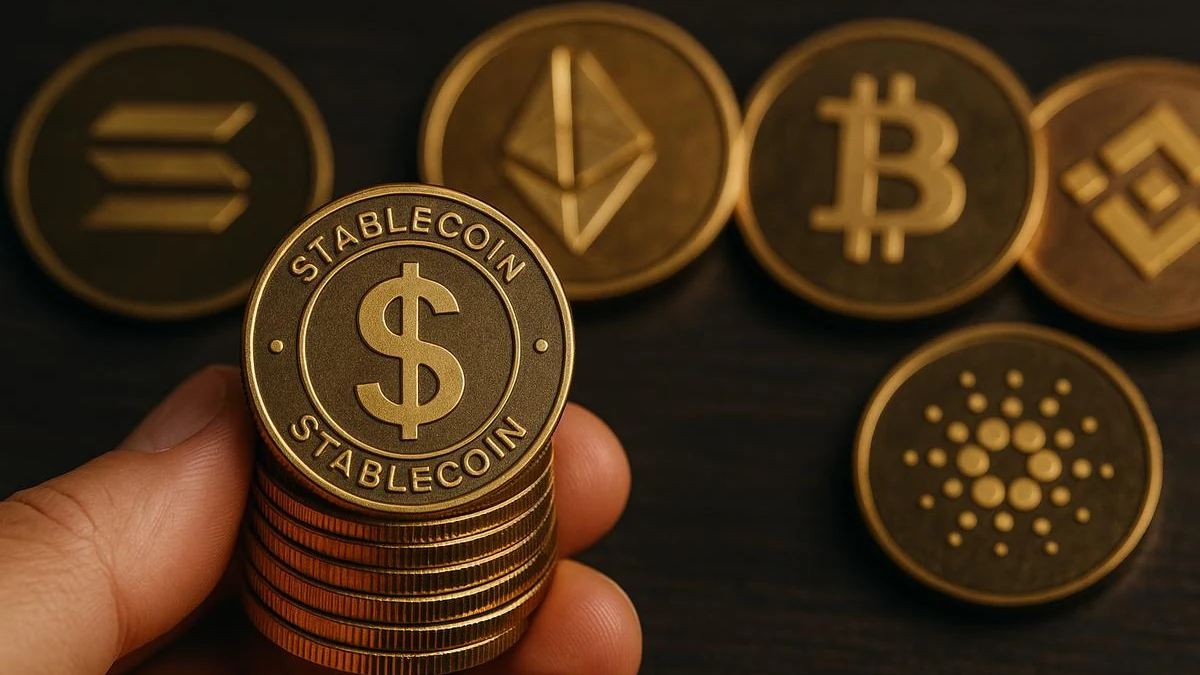
I can hold USDC in my wallet and use it whenever I need to. But if I want that same money to earn interest, I need to understand what happens to it first. Is it being lent to someone? Is it invested in government securities? And what happens if things don’t go as planned?
These are the questions I think matter most when looking at yield-bearing stablecoins. The return is only one part of the story. The other is understanding where the money goes and what could put it at risk.
Key takeaways
- Traditional stablecoins like USDT and USDC do not normally pay holders interest.
- Yield-bearing products generate returns through lending, Treasuries and other strategies.
- Borrower risk can become the holder’s risk.
- High APY does not mean a product is safe.
What Are Yield-Bearing Stablecoins?
Stablecoins such as USDT and USDC are designed to maintain a stable value, usually around one US dollar. People use them to make payments, trade or hold digital dollars without worrying about the price swings of other cryptocurrencies.
Yield-bearing stablecoins offer something extra: the opportunity to earn returns. They put funds to work through activities such as lending or investing in financial assets, then pass the income on to holders. With stablecoin lending.
Example
the returns come from interest borrowers pay on their loans. It’s also worth knowing that not every yield-bearing dollar token is technically a stablecoin. Some are tokenized financial products that provide exposure to investments, each with its own backing, withdrawal rules and risks.
Where Does the Yield Come From?

A yield-bearing stablecoin needs a way to make money before it can pay holders. That income usually comes from lending, investments or trading. Let’s look at how each works.
1. Treasury Bills and Real-World Assets
Some products earn by investing in government securities, such as US Treasury bills. These are short-term loans to the US government that pay interest.
Take Ondo’s USDY, it is backed by short-term US Treasuries and bank deposits. As these assets earn income, the value of USDY increases. You can read more in Ondo’s USDY documentation.
2. DeFi Lending
You deposit stablecoins into a lending platform, and other people borrow them. They pay interest, and you earn a share. Aave is one example, allowing users to supply USDC to a shared pool that borrowers can access.
Your earnings depend on borrowing demand. When more people borrow, interest rates usually rise. When demand falls, rates can drop. This is how stablecoin lending generates returns.
Borrowers also need to provide collateral, usually worth more than the amount they borrow. This is called overcollateralisation.
Definition
Overcollateralisation: means a borrower must deposit assets worth more than the amount they want to borrow.
If the collateral loses too much value, it can be sold to repay the loan. But a sudden price drop can leave unpaid debt and cause losses for lenders. You can learn more about this through our guides to loan-to-value ratios and crypto loan liquidations.
3. On-Chain Credit and Private Credit
Some platforms lend stablecoins to businesses rather than crypto traders. These businesses may use the funds for trade finance or other business needs and repay them with interest.
Unlike many DeFi loans, these loans may not have crypto collateral. Credit risk is the risk that a borrower may fail to repay. This makes it important to assess the borrower’s ability to pay back the loan. On-chain credit brings this type of lending onto the blockchain.
4. Derivatives and Funding Rates
Some products earn through crypto trading strategies. Ethena’s USDe, for example, uses crypto assets and offsetting derivatives positions. It can earn funding payments from traders on the other side of those positions.
These payments can change or disappear, so returns are not guaranteed. Ethena explains the strategy in its USDe documentation.
The main thing to remember is that yield always comes from somewhere. It could be interest from borrowers, income from government securities or payments from trading activity. Each source carries its own risks, and those risks matter just as much as the return.
4. How Does the Yield Reach Your Wallet?

Once a product earns yield, it needs a way to pass those rewards to you. Most use one of two methods.
Rebasing Tokens
With a rebasing token, the number of tokens in your wallet increases as rewards accumulate. You might start with 100 tokens and later have 103. The extra tokens represent your earnings.
Value-Accruing Tokens
With this type of token, your balance stays the same, but each token becomes worth more of the underlying asset over time.
This is how sUSDS works. You can hold the same number of tokens while their redemption value in USDS increases as the Sky Savings Rate accrues.
sUSDe works in a similar way. Rewards build up in the staking contract, increasing the amount of USDe you can receive when you unstake.
5. A Step-by-Step Guide to Checking a Yield-Bearing Product
Before putting your money into a yield-bearing product, look beyond the advertised APY. Take a moment to understand how it works and what risks come with it.
Step by step
- Identify where the yield comes from. Is it generated through lending, Treasury bills, staking or trading?
- Check who manages the funds. Is it a protocol, exchange, custodian or financial institution?
- Understand how rewards are paid. Does your token balance increase, or does each token become worth more?
- Review the withdrawal rules. Can you withdraw at any time, or are there waiting periods and restrictions?
- Assess the risks. Could smart contract failures, liquidity problems or market changes lead to losses?
- Investigate the borrowers if the yield comes from lending. Are the loans overcollateralised, undercollateralised or based on real-world credit agreements? What happens if a borrower defaults?
Hypothetical Example: 10% DeFi APY
Let’s say a DeFi lending platform advertises a 10% APY on your stablecoin deposit. This does not mean you’ll earn exactly 10% over the year. The rate can change depending on borrowing demand and market conditions.
Examples of Yield-Bearing Dollar Products

Let’s look at three products that work in different ways. Each has its own source of returns, so it’s important to understand what is behind the yield.
1. Ethena (USDe and sUSDe)
Ethena has two tokens worth knowing: USDe and sUSDe. USDe is a synthetic dollar backed by crypto assets, stablecoins and hedging positions. Holders can stake USDe to receive sUSDe and earn a share of the protocol’s revenue.
That revenue can come from staking rewards, funding payments from derivatives markets and rewards on stablecoins held by the protocol. The returns can change with market conditions. Ethena’s documentation explains how the system works.
2. Sky (sUSDS)
Sky’s sUSDS allows users to deposit USDS and earn through the Sky Savings Rate. Your token balance does not need to increase; instead, each sUSDS can be redeemed for more USDS as savings accumulate.
The savings rate can change, so check the current rate before depositing. You can see how the token works in Sky’s official documentation.
3. Ondo (USDY)
Ondo’s USDY gives eligible investors access to returns from traditional financial assets, including short-term US Treasuries and bank deposits. As income builds up, the value of USDY increases.
USDY is not available to everyone. As of November 2026, access depends on the investor’s location and eligibility requirements. These rules can change, so check Ondo’s eligibility requirements before relying on them.
I’d keep the original comparison and add Lending stablecoins directly as the third column. I’ve also adjusted the rows to match the four points your boss requested.
Yield-Bearing Products vs Traditional Stablecoins
These options may all involve dollar-based tokens, but they don’t work the same way. Here’s how they compare.
Comparison
| Feature | Traditional stablecoins | Yield-bearing dollar products | Lending stablecoins directly |
|---|---|---|---|
| Purpose | Hold and transfer dollar value. | Hold dollar exposure and earn returns. | Lend stablecoins to borrowers and earn interest. |
| Yield source | Holders don’t normally receive interest. | Treasury bills, lending, derivatives or protocol revenue. | Interest paid by borrowers. |
| Who controls the funds? | The issuer manages the reserves backing the token. | Depends on the product. Funds may be managed by a protocol, custodian or financial institution. | Depends on the platform. Smart contracts or a lending provider may manage the funds. |
| Main risks | Issuer, reserve and depegging risks. | Smart contract, liquidity, market and counterparty risks. | Borrower default, collateral losses, smart contract and platform risks. |
Source: Official documentation from Tether, Circle, Ethena, Sky, Aave and Atlendis. Data checked on: 27 November 2026.
With direct lending, you’re supplying the stablecoins yourself and earning interest from borrowers. You can learn more about lending stablecoins and how CeFi and DeFi crypto loans differ.
One important difference: you don’t need to buy a yield-bearing token to earn interest on stablecoins. You can also lend USDC directly and earn from the interest borrowers pay.
What Are the Risks?
Earning interest on stablecoins comes with risks. Before choosing a product, it’s worth knowing what could happen to your money.
1. Smart Contract Risk
A bug or security flaw in a smart contract could be exploited, leading to lost funds.
2. Depegging Risk
A stablecoin can lose its peg and fall below one dollar. This means your tokens may be worth less than you expect.
3. Liquidity Risk
You may not be able to withdraw your money immediately. Some platforms have waiting periods or limited funds available for withdrawals.
4. Market Risk
Changes in crypto prices can affect a product’s backing assets and the returns it generates, especially when trading strategies are involved.
5. Counterparty Risk
If a company, exchange or custodian managing the funds fails, you could lose some or all of your money.
6. Borrower Default and Bad Debt
A borrower may fail to repay a loan. Even when collateral is provided, sudden market drops can make liquidations less effective. With undercollateralised loans, there may be no collateral to recover the debt.
7. Changes in Lending Rates
When fewer people borrow, lending rates usually fall. This means the interest you earn can decrease over time.
Regulation and the Future of Yield-Bearing Stablecoins
Governments are paying more attention to stablecoins, especially when companies offer returns to people who hold them.
In the United States, the GENIUS Act was signed into law on 18 July 2025. It says permitted payment stablecoin issuers cannot pay holders interest or yield “solely in connection with the holding, use, or retention” of their stablecoins. This includes payments in cash, tokens or other forms of value. The rule applies to issuers, so it does not automatically ban every product that earns returns through lending or investments.
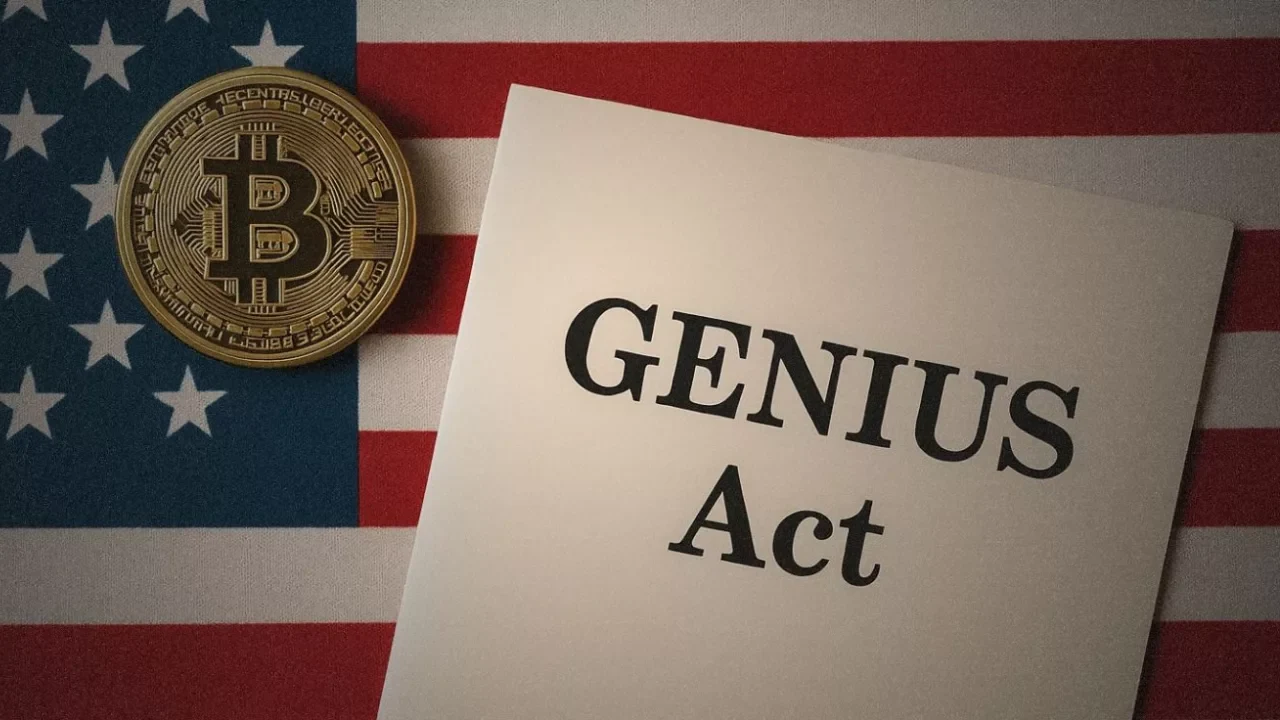
On 21 October 2026, the Office of the Comptroller of the Currency (OCC) announced its final rules for putting the law into practice. The rules are expected to take effect on 18 January 2027.
There is still a question around rewards paid by exchanges or other third parties. In its final rules, the OCC said these arrangements should be assessed based on how they work and whether they are being used to get around the law. So, rewards from exchanges are not automatically banned, but they are not automatically allowed either.
Regulatory information checked on: 27 November 2026.
Final Thoughts
What stands out to me about yield-bearing stablecoins is that the return always comes from somewhere. It could be interest from borrowers, income from investments or a trading strategy. Understanding that source matters because it helps explain the risks behind the yield.
I wouldn’t choose a product based on its APY alone. I’d want to know where my money goes, how I can withdraw it and what could happen if things don’t go as planned. And when the yield comes from lending, I think it’s especially important to understand who is borrowing the money and whether they can repay it.
For me, the yield is only part of the decision. Understanding what is behind it matters just as much.
Frequently asked questions
How do yield-bearing stablecoins make money?
They earn through activities such as lending, investing in assets or trading. The income generated is used to provide returns to holders.
Are yield-bearing stablecoins safe?
They carry risks, including borrower defaults, market changes and smart contract failures. You could lose money, so understand how the product works before using it.
Is the advertised APY guaranteed?
No. APY can change as borrowing demand, market conditions or investment returns change.
Can a yield-bearing stablecoin lose its dollar value?
Yes. It can lose value if its backing or the strategy behind it runs into problems.
What is the difference between USDT and a yield-bearing dollar token?
USDT is designed to stay close to one dollar and does not normally pay holders interest. A yield-bearing dollar token aims to provide returns as well.
Is lending stablecoins the same as holding a yield-bearing stablecoin?
No. When you lend stablecoins, you supply them to a borrower or lending platform and earn interest. A yield-bearing token earns or reflects returns through its own strategy, which may include lending.
Sources
Sources (3)
- GENIUS Act, Public Law 119-27, Section 4(a)(11). U.S. Congress. Accessed 27 November 2026.
- OCC Bulletin 2026-50, GENIUS Act Regulations: Final Rule. Office of the Comptroller of the Currency. Published 21 October 2026. Accessed 27 November 2026.
- OCC News Release 2026-92, Final Rule Announcement. Office of the Comptroller of the Currency. Published 21 October 2026. Accessed 27 November 2026.
- USDT — Tether official documentation. Accessed 27 November 2026.
- USDC — Circle official documentation. Accessed 27 November 2026.
- Aave Protocol documentation. Accessed 27 November 2026.
- Ethena documentation. Accessed 27 November 2026.
- Sky documentation: sUSDS. Accessed 27 November 2026.
- Ondo documentation: USDY and eligibility requirements. Accessed 27 November 2026.
- Atlendis: Stablecoin Lending; On-Chain Credit; Trade Finance; Private Credit; Loan-to-Value Ratios; Crypto Loan Liquidation; CeFi vs. DeFi Crypto Loans; Lend. Accessed 27 November 2026.
Our standards
This article was researched from primary sources and checked by a second person before publication. Found an error or an outdated number? Tell us and we will correct it. Corrections policy.