


When I started researching Confidential Transactions, I became interested in a problem facing on-chain lending: how can businesses keep their borrowing details private when blockchain transactions are publicly visible?
Loan amounts, collateral and repayment activity can reveal a company’s financial position. For businesses, that information may be commercially sensitive.
Confidential Transactions offer a way to protect some of these details without removing the checks lenders need to make informed decisions. I wanted to understand how that works and what it could mean for on-chain credit.
Key takeaways
- Confidential Transactions hide loan amounts while allowing transactions to be verified.
- Hiding amounts does not make borrowers anonymous or hide all their activity.
- Lenders still need to check collateral and assess whether borrowers can repay.
- Borrowers can keep financial details private while sharing what lenders need to make lending decisions.
What Are Confidential Transactions?
Confidential Transactions (CT) use cryptography to hide transaction amounts while allowing the network to verify that the transaction is valid. Some systems can also hide the type of asset being transferred.
What I find interesting is that the network can still check a transaction without everyone seeing the amount. For lending, that means a loan can offer more privacy without losing verification. However, lenders still need access to the information required to assess risk and verify collateral.
Why This Matters for Lending
A business financing a shipment may not want competitors knowing how much it has borrowed or when it makes repayments. On a public blockchain, that activity can reveal details about its cash flow and financing needs. Confidential Transactions can help keep those amounts private while allowing the network to verify the transactions.
How Confidential Transactions Work
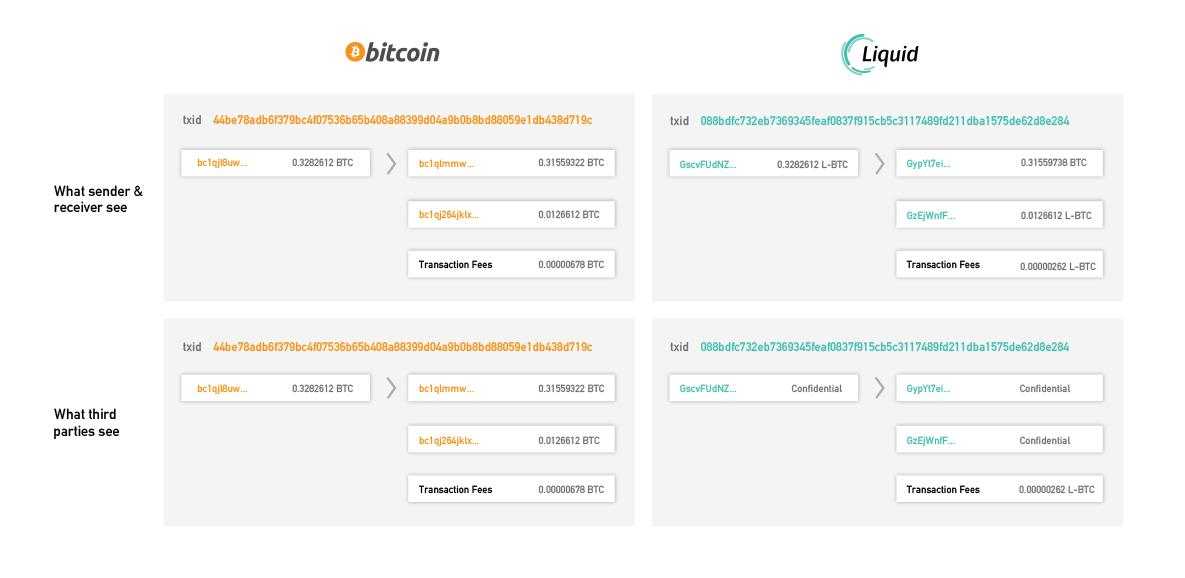
Confidential Transactions use two cryptographic tools: commitments and range proofs. A commitment hides an amount while keeping it fixed, while a range proof lets the network check that the amount falls within a valid range without revealing it. Liquid also uses asset surjection proofs to verify that the assets being transferred are valid without revealing their types.
I found Liquid Network useful when researching this because it shows how the technology works in practice. It hides transaction amounts and asset types, but addresses, transaction relationships and fees remain visible. This means the transaction can be verified without making every detail public.
Hypothetical Example
A mid-sized exporter borrows on-chain to finance a shipment. On a public blockchain, anyone can see how much it borrowed and follow its repayments.
With Confidential Transactions, the transaction amounts stay hidden from public view, while the network can still verify the transfers.
What Information Do Confidential Transactions Hide?
I looked at Liquid Network to understand what this privacy looks like in practice. Its Confidential Transactions feature hides transaction amounts and asset types by default, but other details remain visible.
Liquid Network Privacy Overview
| Transaction detail | Liquid Network |
|---|---|
| Transaction amounts | Hidden |
| Asset types | Hidden |
| Wallet addresses | Visible |
| Transaction relationships | Visible |
| Number of inputs and outputs | Visible |
| Transaction fees | Visible |
| Timestamps and block information | Visible |
For a borrower, this means the amount of a loan can remain private, but wallet activity is still visible. Outsiders may be able to see who a business transacts with and when repayments take place, even if they cannot see the amounts involved.
Where Can Confidential Transactions Be Useful?
Keeping loan amounts private can make a difference in several areas of lending:
- Private credit and institutional borrowers: Businesses may not want competitors knowing how much they have borrowed or the terms of their financing.
- Trade finance: Public invoice values and payment amounts can reveal who a business works with and the value of its deals. Keeping these figures private helps protect those relationships.
- Revenue-based financing: Repayments are tied to a company’s revenue. If the amounts are visible on-chain, competitors could use them to estimate the business’s earnings.
- Lenders: Public pool allocations and position sizes can reveal where lenders are putting their money, making it easier for others to copy their strategies or anticipate their next moves.
- Collateralised DeFi loans: When liquidation prices are visible, other traders can keep an eye on large positions and look for opportunities around a potential liquidation. This is one of the risks explored in crypto loan liquidation.
Confidential Transactions do not hide everything. Wallet activity, identities and loan agreements may still be visible, so protecting those details requires other privacy measures.
Privacy vs Trust: What Lenders Still Need to See

Lenders still need to check a borrower’s collateral, finances and repayment history. Keeping loan details private should not stop them from seeing what they need to make a decision.
This is where selective disclosure helps. Borrowers can share private details with lenders, auditors or regulators without exposing them publicly. Liquid, for example, lets users share blinding keys so authorised parties can view hidden transaction amounts and asset types. Liquid’s documentation explains how.
The same applies to on-chain credit scoring: lenders need a way to assess borrowers whose financial history is partly hidden. Atlendis’s work with Credora is one example of using private financial information to assess credit risk.
What Are the Risks and Limitations?
Confidential Transactions offer more privacy, but they also have some drawbacks.
When transaction amounts are hidden, financial investigations can become harder. Lenders may also find it difficult to assess a borrower’s finances and check their collateral. Liquidation systems still need clear collateral values to know when a position should be closed. Credit providers must also follow KYC and AML rules, even when transactions are private.
There are technical challenges too. Cryptographic proofs can make transactions larger and require more computing power. Poor implementation can create security risks. Wallet addresses and transaction times may also remain visible, giving others clues about someone’s financial activity.
Security warning
Be careful with platforms promising private loans without explaining what they actually hide. Find out what information stays private and how lenders can still check borrowers and their collateral.
Before using a privacy-focused network, understand what it hides and what remains visible.
What Are Financial Institutions Exploring?
Banks are also exploring how to use blockchain for tokenised assets and credit without exposing sensitive customer information.
In November 2024, J.P. Morgan published Project EPIC, a research initiative built around three requirements for privacy in tokenised finance:
- Anonymity: Keeping participants’ identities private.
- Confidentiality: Hiding transaction amounts and asset types.
- Auditability: Allowing authorised parties to verify transactions when needed.
For lending, these three requirements highlight an important balance. Borrowers need privacy, but lenders and regulators still need ways to check financial activity and meet their obligations. This is an important part of making tokenised credit work in institutional finance.
Projects Exploring Transaction Privacy
Not every blockchain handles privacy in the same way. Liquid, Monero and Beam are good examples of this. Liquid hides transaction amounts and asset types, so people can verify transfers without seeing exactly what was sent. Monero goes further by also hiding who sends and receives the funds. Beam takes another approach, using Mimblewimble to keep transaction details private by default.
Although they all focus on financial privacy, they are not lending protocols. Their approaches simply show the different ways blockchain networks can protect transaction information. You can learn more from the official documentation for Liquid, Monero, and Beam.
Questions to Ask Before Using a Private Lending Platform
Before using a platform that offers private loans, there are a few things worth checking:
- What exactly is hidden? Are loan amounts, asset types or wallet details kept private?
- Who can see the actual figures? Can lenders, auditors and regulators access them when needed?
- How is collateral checked? Can the lender confirm that the borrower has enough collateral?
- What happens at liquidation? Can the platform still tell when collateral is no longer enough to cover a loan?
- Does the platform meet KYC and audit requirements? How does it verify borrowers and keep the necessary records?
What This Means for On-Chain Credit
For businesses, privacy could make borrowing on-chain more appealing. They may be able to access credit without putting their loan amounts and repayment activity on public display.
Lenders still need to know who they are lending to, check collateral and keep track of repayments. The challenge is making this possible without exposing every financial detail to the public.
My Thoughts
Personally, I would think twice before taking a business loan on a fully transparent blockchain. I wouldn’t want competitors tracking how much my business borrows or when it makes repayments.
But I also understand why lenders need access to that information. To me, the real value of Confidential Transactions in lending is simple: businesses should have some privacy, and lenders should still have enough information to make sound decisions.
Frequently asked questions
Are Confidential Transactions completely anonymous?
No. They hide transaction amounts, not necessarily wallet addresses or transaction activity.
Which blockchain uses Confidential Transactions?
Liquid Network uses Confidential Transactions to hide amounts and asset types.
Can a blockchain verify a transaction without seeing the amount?
Yes. Cryptographic proofs allow the network to verify hidden amounts.
Can a DeFi loan be private?
Yes. Some protocols can hide loan amounts while keeping other transaction details visible.
How do lenders assess risk if amounts are hidden?
They can review financial records, collateral and repayment history through authorised disclosure.
Sources
Sources (3)
- Liquid Network Developer Documentation — Confidential Transactions. Accessed 27 November 2026.
- Liquid Network Developer Documentation — How Liquid Works. Accessed 27 November 2026.
- Blockstream Help Center — How Does Liquid Keep My Transaction Data Confidential? Accessed 27 November 2026.
- J.P. Morgan — Project EPIC: Fueling Tokenized Finance with On-Chain Enterprise Privacy, Identity and Composability. Published 6 November 2024.
- Monero Official Documentation — Technical Specifications. Accessed 27 November 2026.
- Beam Official Documentation — Mimblewimble and Confidential Transactions. Accessed 27 November 2026.
Our standards
This article was researched from primary sources and checked by a second person before publication. Found an error or an outdated number? Tell us and we will correct it. Corrections policy.